
Sweepstakes Casino Game Providers and Software Studios
 Available in GB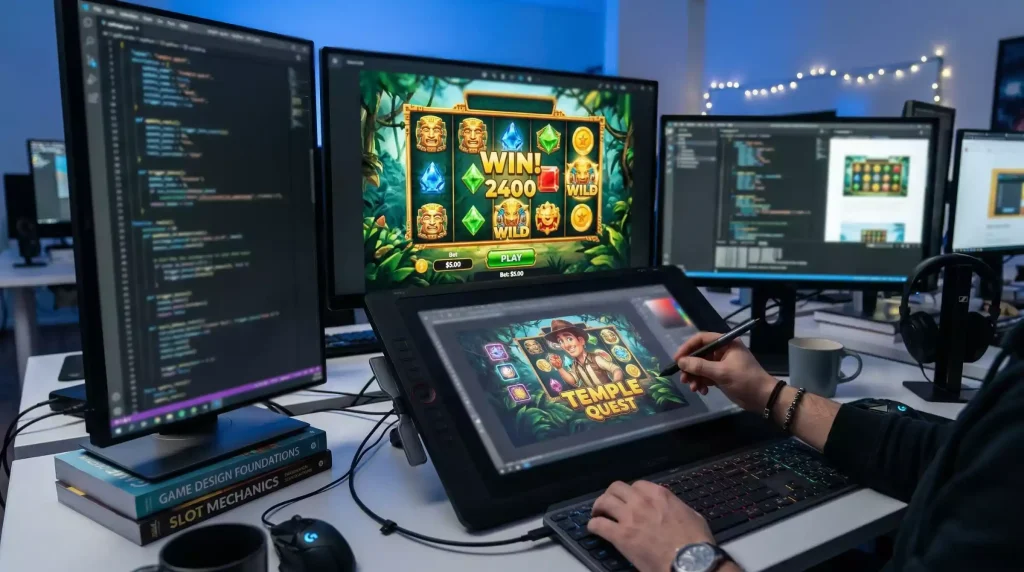
Certified Software Providers Sourcing Sweepstakes Slots
Sweepstakes casino game providers differ substantially from those supplying traditional regulated online casinos. While major iGaming jurisdictions feature well-known developers like NetEnt, Microgaming, and Evolution Gaming, sweepstakes platforms operate with a mix of proprietary studios and providers specifically licensed for the sweepstakes model.
This distinction matters because game quality, fairness verification, and feature availability all depend on who develops the games you play. Some sweepstakes casinos feature titles from established developers with proven track records, while others rely entirely on in-house development with less transparent quality assurance.
The sweepstakes casino sector has grown rapidly, with KPMG reporting gross revenues exceeding $10.6 billion in 2026. This scale attracts increasing developer interest, gradually expanding game selection beyond early proprietary-only catalogs.
Understanding which providers supply games at your preferred platforms helps evaluate game quality and fairness expectations. Players coming from regulated online casinos may notice significant differences in available titles and developer variety compared to those environments.
Major Game Providers in the Sweepstakes Space
Pragmatic Play has emerged as the most prominent traditional gaming provider operating in the sweepstakes casino market. Their sweepstakes-specific content delivers familiar titles adapted for the dual-currency model. Platforms featuring Pragmatic Play games offer recognizable slots with established RTPs and proven gameplay mechanics.
Traditional game providers must create separate licensing arrangements for sweepstakes distribution, which differs fundamentally from regulated gambling jurisdictions. This explains why even major providers offer limited sweepstakes catalogs compared to their full libraries—sweepstakes agreements require distinct legal frameworks and compliance structures.
VGW (Virtual Gaming Worlds) operates as both a platform operator and game developer. Their proprietary studios create exclusive content for platforms like Chumba Casino and LuckyLand Slots. These in-house games appear nowhere else, providing unique experiences but limiting transparency about game mechanics.
Relax Gaming provides content to select sweepstakes platforms, bringing titles from their aggregation network into the sweepstakes space. Their involvement signals growing traditional provider interest in the model, potentially expanding quality game availability over time.
Smaller studios specializing in sweepstakes content have emerged alongside major providers. These developers create original games specifically for the sweepstakes model, sometimes offering innovative features but with less established track records for fairness and quality.
Approximately 60-70% of sweepstakes platforms now feature at least some content from established third-party providers, compared to nearly 100% proprietary content five years ago. This shift reflects maturing market standards and player demand for recognizable quality.
Proprietary vs Licensed Games
Proprietary games developed in-house by sweepstakes casino operators offer exclusivity but raise transparency questions. Without external certification requirements that regulated jurisdictions mandate, players must trust operator claims about game fairness. Some proprietary games provide no published RTP information whatsoever.
Licensed games from established providers typically maintain the same RTPs and mechanics as their regulated counterparts. Pragmatic Play slots on sweepstakes platforms function identically to versions at licensed online casinos, providing known fairness parameters and tested gameplay.
Visual quality varies considerably between proprietary and licensed content. Major providers invest heavily in graphics, animations, and sound design. Some proprietary sweepstakes games match this quality, while others appear dated or generic by comparison.
Feature availability differs between game sources. Licensed games include the same bonus rounds, multipliers, and special features as original versions. Proprietary games implement varied feature sets without standardized expectations, creating inconsistent player experiences across platforms.
Update frequency favors licensed content since providers continuously improve their games based on broad market feedback. Proprietary games may receive infrequent updates or remain static indefinitely, potentially falling behind evolving player expectations.
Game Selection by Platform
Stake.us offers one of the most diverse provider mixes in the sweepstakes space. Their catalog includes Pragmatic Play titles alongside proprietary games and content from several smaller studios. This variety provides approximately 400+ games across multiple categories.
Crown Coins Casino features primarily proprietary content supplemented by select licensed titles. Their game library exceeds 300 games with emphasis on slot variety. Table game selection relies more heavily on licensed providers for authentic gameplay.
McLuck maintains a mixed library of approximately 250 games from both proprietary and third-party sources. Their slot selection emphasizes licensed content while table games include a mix of development sources.
WOW Vegas operates with a substantial proprietary catalog exceeding 350 games. While some licensed titles appear, the majority comes from in-house or exclusive development arrangements. This approach provides unique content but limits access to recognizable titles.
Pulsz Casino emphasizes licensed content more than most competitors, featuring strong Pragmatic Play presence alongside proprietary offerings. Their 400+ game library provides above-average access to established developer content.
Assessing Game Quality
Graphics and animation quality provide immediate visual indicators of development investment. High-quality games feature smooth animations, detailed symbols, and polished interfaces. Choppy animations, generic graphics, or dated visual styles suggest lower development standards.
Feature complexity indicates development sophistication. Games with multiple bonus types, progressive elements, and varied gameplay mechanics typically come from experienced developers. Simple spin-and-win mechanics without special features may indicate basic development.
Sound design quality correlates with overall production values. Professional sound effects, musical scores, and audio feedback create immersive experiences. Generic or absent audio suggests cost-cutting that may extend to other quality aspects.
Mobile optimization reveals development priorities. Games that perform poorly on smartphones or require compromised interfaces likely received insufficient development resources. Quality developers ensure consistent experiences across all devices.
Published RTP information, while not always available at sweepstakes casinos, signals transparency commitment when present. Games displaying return percentages suggest developers confident in their fairness implementation.
Player reviews and community discussions provide real-world quality feedback beyond technical indicators. Long-term player experiences reveal issues that might not appear during brief evaluation sessions. Seeking community input about specific games supplements personal assessment.
Comparison with regulated casino versions of the same games, when available, provides useful benchmarks. Players familiar with specific titles from licensed platforms can assess whether sweepstakes versions perform comparably or show noticeable differences.
Platform Exclusive Games
Exclusive titles provide differentiation between sweepstakes casinos but prevent comparison with experiences available elsewhere. Players enjoying an exclusive game cannot know how it compares to alternatives since identical versions don’t exist at other platforms.
Some exclusives represent genuinely innovative games developed specifically for a platform’s player preferences. Others simply rebrand generic content as exclusive without meaningful differentiation. Evaluating exclusives requires experiencing them directly rather than relying on comparable references.
Exclusive content can indicate platform investment in player experience. Operators commissioning custom games demonstrate commitment beyond licensing existing content. However, this investment doesn’t guarantee quality without additional evaluation.
Multi-platform players may find exclusives limiting since favorite games become accessible only at specific casinos. Players preferring consistency across platforms benefit from prioritizing casinos featuring shared licensed content over exclusive-heavy catalogs.
Evaluating exclusive games requires direct testing since comparative reviews aren’t possible. Spending initial free SC on exclusive titles helps assess quality before committing significant play time. Quality exclusives can justify platform loyalty, while disappointing exclusives shouldn’t influence platform selection.
The trend toward more licensed content suggests exclusive-heavy strategies may diminish over time. As major providers expand sweepstakes presence, platforms competing primarily on exclusives may find differentiation increasingly difficult. Players currently enjoying exclusives should monitor whether preferred titles remain available as market dynamics evolve.
Documentation of exclusive game performance helps individual players track personal experiences. Since third-party reviews rarely cover platform-specific titles comprehensively, maintaining notes on RTP observations, feature frequency, and entertainment value creates personal reference guides for future sessions.